
Título: Leaving Cert Spanish: The Adjectives That Actually Show Up in the Exam
Once you’ve got the basics of adjective agreement down, the next challenge is vocabulary — specifically, the kind of adjectives that actually turn up in Leaving Cert reading comprehension texts. Words like impresionante, acogedor, or vulnerable aren’t in every beginner’s textbook, but they show up again and again in real exam papers. So instead of guessing, I went straight to the source and built this workbook’s vocabulary from genuine Higher Level exam texts.
A bonus most students miss: nationality adjectives
Here’s a pattern that catches a lot of students out. You already know that adjectives ending in -e or a consonant usually don’t change for gender (grande stays grande). But nationality adjectives break that rule:
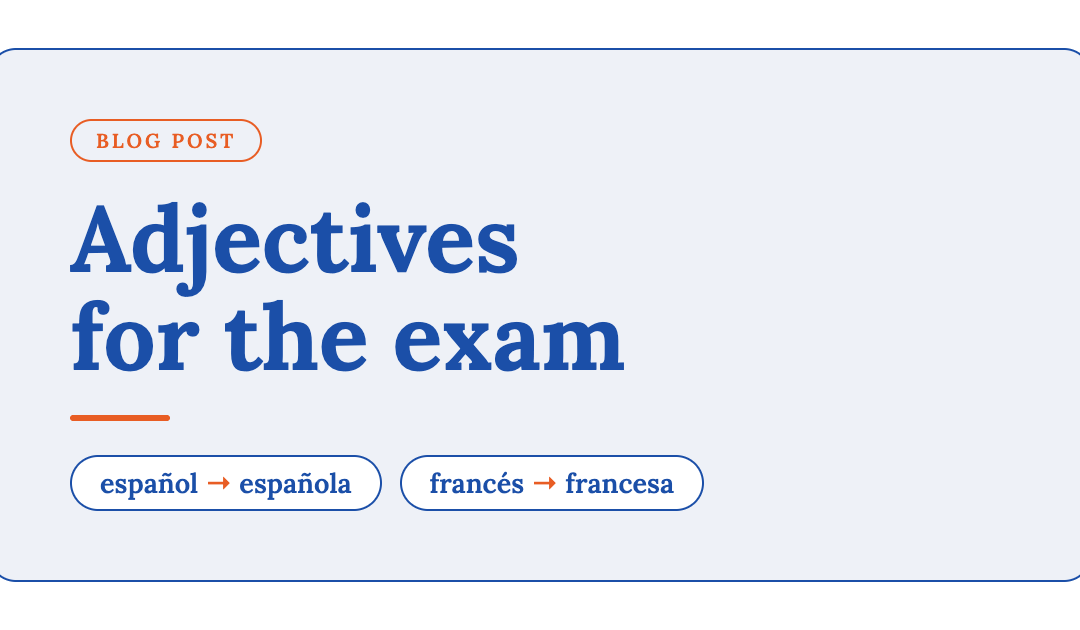
español → española, francés → francesa, alemán → alemana
These endings look like they should stay fixed — but they don’t. And several of them also lose their written accent in the plural (francés → franceses), which is exactly the kind of small detail examiners like to test.
Why this matters more than it seems
Reading comprehension questions often ask you to explain a phrase “in your own words” or find a synonym in the text — and getting an adjective’s agreement wrong in your answer can cost marks even when your understanding of the text was correct. Precision here isn’t just about grammar for its own sake; it’s about not losing marks you’d already earned.
Practise with real exam vocabulary
I put together a workbook with 63 adjectives — including a dedicated table of nationality adjectives and their exception rule — plus five exercise types with a full answer key. You can find it here
Alejandra is a native Spanish teacher based in Ireland, offering Leaving Cert Spanish tutoring online. Explore more grammar guides at spanishgrinds.com.