If you’ve ever written “la chica es alto” in an essay, you’re not alone — this is one of the most common mistakes I see in Leaving Cert Spanish, at every level. Adjective agreement seems simple at first (just add an -a for feminine, right?), but in the middle of writing an opinion piece or a description under exam pressure, it’s one of the first things students forget.
Here’s what I actually tell my students.
Adjectives have to “match” the noun
In Spanish, adjectives change depending on the noun they describe — in both gender (masculine/feminine) and number (singular/plural). Think of it like a matching pair: if the noun is feminine and plural, the adjective has to be feminine and plural too, even if there are several words in between.
The four patterns worth memorising
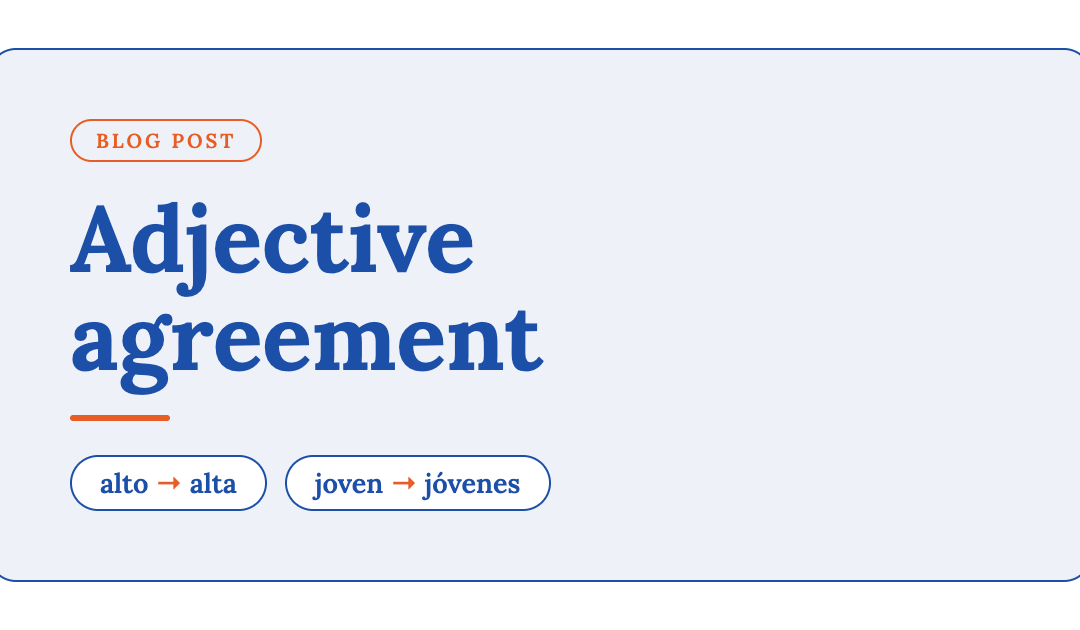
- Most adjectives ending in -o switch to -a for feminine: alto → alta.
- Adjectives ending in -e or a consonant don’t change for gender — only for number: grande → grandes.
- To make the plural, add -s after a vowel, or -es after a consonant: fácil → fáciles.
- Adding a syllable in the plural can mean a word suddenly needs a written accent (tilde) it didn’t have before — even though the spoken stress doesn’t actually move: joven → jóvenes.
Where students actually lose marks
It’s rarely the simple sentences that trip students up — it’s when a sentence gets longer, and by the time they reach the adjective, they’ve lost track of what noun it’s describing. That’s exam pressure, not lack of knowledge. My advice: a short sentence you’re sure of will always score better than a long one you’re not — don’t reach for a complicated structure just to sound impressive if it means losing track of your own agreement halfway through.
Practise it properly
I put together a workbook with 30 common adjectives and five different types of exercises — including a short text where you have to spot the right form in context, which is the closest thing to what you’ll actually face in the exam. You can find it here.
Once you’ve got the basics down, there’s also an Intermediate workbook (43 adjectives from real exam texts) and an Advanced workbook (50 adjectives, with exam-style comprehension practice) to keep building on this.
Or save €4 by getting all three levels together in the Complete Bundle (€10).